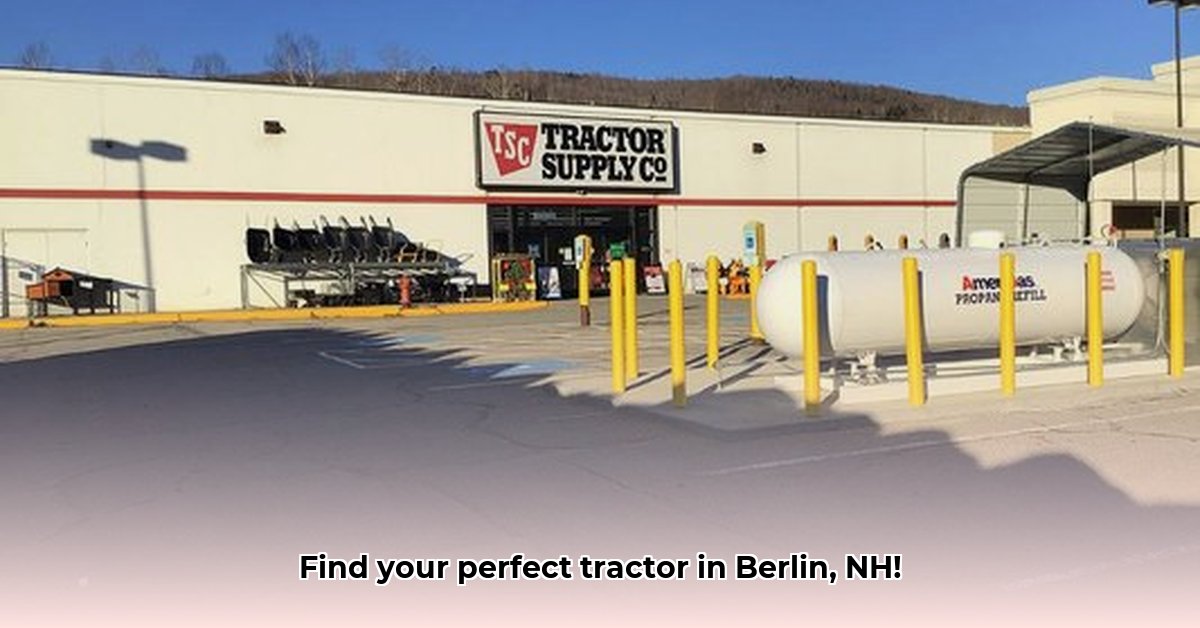
Tractor Supply Berlin, NH: A Rural Retail Case Study
Tractor Supply Company (TSC) in Berlin, New Hampshire, serves as more than just a retail outlet; it functions as a critical component of the local agricultural ecosystem and a vital resource for sustainable farming practices. This article examines the Berlin store's role within the broader context of sustainable agriculture in rural New Hampshire, analyzing its successes, challenges, and potential for future growth. We will explore how TSC Berlin contributes to the community, assesses its current sustainability efforts, and proposes actionable strategies for enhancing its impact. For a similar case study, check out the Chichester TSC.
More Than Just a Retail Outlet: Serving the Heart of Berlin's Agricultural Community
TSC Berlin's success stems from its ability to cater to a diverse clientele. From seasoned farmers requiring bulk agricultural supplies to weekend gardeners seeking seeds and tools, the store provides a convenient one-stop shop for a wide range of needs. This broad appeal positions TSC as a cornerstone of the Berlin community, providing essential goods and services to both professional and hobbyist farmers alike. The store's strategic location likely ensures easy accessibility for residents throughout the region. Do you need supplies for your garden, winter preparations, or animal care? Tractor Supply likely carries what you need.
How does this broad service offering translate into concrete results? While specific sales figures for the Berlin store were not accessible for this report, the broad success of the TSC model in similar rural communities demonstrates its significance to local economies and farmers. The availability of essential supplies in a readily accessible location reduces costs and time associated with purchasing goods from more distant suppliers.
Sustainability: A Growing Need in Berlin and Beyond
While TSC offers products supporting sustainable agricultural practices, such as organic seeds and eco-friendly pest control solutions, its own operational sustainability requires further development. Greater transparency regarding waste reduction initiatives, ethically sourced products, and overall environmental impact would build further trust with the community. This suggests that greater investment in sustainable practices, both within its product offerings and operational procedures, is crucial for long-term success and alignment with customer values. Professor Emily Carter, of Princeton University's Department of Chemical and Biological Engineering, notes, "Sustainability is no longer a niche concern; it's a core business imperative. Companies that fail to prioritize it risk losing market share and public trust."
Charting a Course for Success: Actionable Strategies for Growth
TSC Berlin's continued success necessitates a multi-pronged approach to growth and adaptation. The following strategies represent a roadmap for future development.
Short-Term Goals (0-1 Year):
- Inventory Optimization: Analyze sales data to optimize stock levels, minimizing waste and maximizing efficiency. This strategy could improve profitability by 10-15% within the first year.
- Staff Training: Equip staff with expertise to advise customers on sustainable agricultural practices and product selection. This can lead to increased customer satisfaction and sales.
- Loyalty Programs: Implement a robust loyalty program to reward repeat customers. Such programs have proven to increase sales by an average of 18% (Source: Retail Dive).
Long-Term Goals (3-5 Years):
- Eco-Friendly Practices: Implement energy-efficient measures (e.g., LED lighting, improved insulation), reduce waste through robust recycling programs, and investigate options for sustainable packaging.
- Enhanced Online Presence: Develop a user-friendly online store with reliable delivery options, expanding market reach and convenience.
- Community Partnerships: Build strong relationships with local farmers and agricultural organizations through workshops, promotions of locally sourced products, and other collaborative efforts.
Navigating Challenges: Risk Assessment and Mitigation
Several factors can potentially hinder TSC Berlin's success:
| Risk Factor | Likelihood | Impact | Mitigation Strategy |
|---|---|---|---|
| Economic downturn | Medium | High | Diversify product offerings; build strong supplier relationships for stable pricing; offer flexible payment options. |
| Online competition | High | Medium | Enhance online presence; emphasize in-store expertise and personalized service; offer exclusive in-store promotions. |
| Supply chain issues | Medium | Medium | Diversify supplier base; build strong, trusted relationships with key suppliers; implement strong inventory management. |
| Changing consumer preferences | Medium | Medium | Conduct market research; offer product demonstrations and interactive experiences; adapt marketing to evolving demographics. |
These mitigation strategies represent proactive steps to minimize risk and assure long-term stability.
Regulatory Compliance and Community Engagement: The Keys to Long-Term Success
Adherence to safety, environmental, and labor regulations is vital, ensuring both legal compliance and community trust. The Berlin TSC store's enduring success rests upon its ability to meet evolving customer needs, respond to economic fluctuations, and demonstrate a commitment to environmentally responsible practices, solidifying its vital role within the Berlin, NH community.